

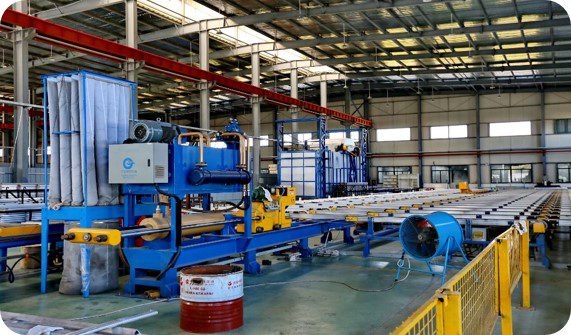
1. Introduction to Precision Extrusion Manufacturing
Extrusion manufacturing is a core industrial process used to produce plastic and aluminum profiles with constant cross-sections and stable dimensions. It supports large-scale production while maintaining dimensional control and structural consistency.
Precision extrusion is widely applied in industrial equipment, construction systems, consumer electronics, medical devices, and automation structures.
2. What is Plastic Extrusion?
Plastic extrusion is a continuous manufacturing process in which thermoplastic materials such as PVC, ABS, PP, PE, and PC are heated and pushed through a custom extrusion die using a screw-driven system.
2.1 Working Principle
- Raw plastic material is heated to a plasticized state
- The screw extrusion system pushes material forward
- Material flows through a custom die
- The profile is cooled, calibrated, pulled, and cut
2.2 Advantages of Plastic Extrusion
- Continuous forming suitable for long-length profiles
- Excellent cross-sectional consistency
- Wide material compatibility
- Cost-effective mass production
- Easy integration with secondary processing
2.3 Typical Applications
- Industrial plastic profiles
- Construction decorative trims
- Consumer electronics housings
- Medical support components
3. What is Aluminum Extrusion?
Aluminum extrusion involves heating aluminum billets (6063, 6061, and other alloys) and forcing them through precision dies under high pressure.
3.1 Working Principle
- Aluminum billet is heated
- High pressure pushes material through die
- Profile exits with defined cross-section
- Straightening, cutting, and surface finishing follow
3.2 Advantages of Aluminum Extrusion
- High strength and lightweight properties
- Strong dimensional stability
- Suitable for structural applications
- Supports complex cross-sectional designs
- Compatible with anodizing and powder coating
3.3 Typical Applications
- Automation equipment frames
- Industrial structural components
- Architectural profiles
- Mechanical support systems
4. The Role of Die Design Optimization
Extrusion die design is critical in maintaining process stability and dimensional accuracy.
4.1 Why Die Design Matters
Improper die design may cause:
- Warping
- Uneven wall thickness
- Surface defects
- Dimensional deviation
4.2 Benefits of Optimized Die Design
- Balanced material flow
- Improved surface quality
- Reduced scrap rate
- Better production efficiency
- Stable batch consistency
Die design optimization ensures high consistency production and reduces the need for excessive post-processing.
5. Integrated Secondary Processing
Extrusion forming is often combined with secondary operations to meet final application needs.
5.1 Secondary Processing Capabilities
- Cutting to length
- Drilling
- Tapping
- CNC machining
- Surface finishing (anodizing, powder coating, polishing)
5.2 Benefits of Integration
- Reduced lead time
- Improved assembly compatibility
- Better quality control
- Lower overall production cost
Integrated manufacturing improves efficiency from design to delivery.
6. Industrial Applications of Precision Extrusion
6.1 Industrial Equipment
Used for structural frames, guide rails, support structures, and protective components requiring dimensional control and mechanical stability.
6.2 Construction & Architecture
Applied in window frames, decorative trims, and structural profiles requiring corrosion resistance and strength.
6.3 Consumer Electronics
Used for housings, support frames, and structural components that require appearance consistency and process stability.
6.4 Medical Devices
Suitable for equipment frames and structural components requiring batch reliability and dimensional accuracy.
6.5 Automation & Machinery
Aluminum extrusion supports modular frames and scalable automation systems.
7. Process Stability and Quality Control
Precision extrusion depends on:
- Temperature control systems
- Standardized production procedures
- Continuous monitoring
- Dimensional inspection systems
- Quality control management
Stable processes ensure repeatable and reliable production results.
8. Future Trends in Extrusion Manufacturing
Extrusion technology continues to evolve toward automation and higher efficiency.
8.1 Automation and Smart Monitoring
- Intelligent process tracking
- Digital quality control
- Real-time temperature monitoring
8.2 Lightweight Design Demand
Growing demand for lightweight aluminum extrusion solutions in industrial and automation systems.
8.3 Sustainable Manufacturing
- Improved material utilization
- Energy-efficient heating systems
- Recyclable aluminum alloys
9. Conclusion
Precision extrusion manufacturing combines plastic extrusion, aluminum extrusion, die design optimization, and integrated secondary processing to support industrial equipment, construction systems, electronics, medical devices, and automation structures.
Through process stability, dimensional control, and engineering integration, extrusion manufacturing continues to play a critical role in modern industrial production.